Commercial vessels operate where cellular networks end. Beyond coastal range, connectivity turns intermittent and expensive, routed through satellite links that add latency and recurring bandwidth cost. Cloud-dependent artificial intelligence (AI) telematics architectures treat that connection as a given, which makes them unreliable at sea, where reliability matters most. Processing telematics data onboard, at the point it is generated, removes the dependency and keeps ship monitoring systems running through any connectivity state.
Reliable vessel monitoring needs its intelligence onboard, not in a data centre thousands of kilometres away.
Why Cloud Dependency Is a Structural Problem for Marine Telematics
A vessel in open water or remote offshore operation loses cellular coverage entirely, often for days. Satellite connectivity fills part of the gap, but it carries high latency, metered bandwidth, and a single point of failure that make real-time cloud inference impractical for time-sensitive decisions. The connection is not a stable utility at sea; it is a variable the system has to survive.
That variable defines the limits of marine telematics built on cloud dependency. A ship monitoring system that sends sensor data ashore for analysis cannot support engine anomaly detection, navigation decision support, or compliance verification when the link drops, and the link tends to drop in exactly the conditions, heavy weather, congested ports, and deep-sea transit, where those functions earn their place.
Edge AI removes the dependency by moving inference onto the vessel, so ship operations and management hold their analytical capability, whether or not a connection exists.
What Is Edge AI, and How Does It Apply to Vessel Monitoring?
Edge AI is the deployment of trained AI inference models on local hardware at the point where data is generated, rather than transmitting raw data to a remote server before a decision can be made. The model runs on the device. The result is a decision produced in milliseconds, on-site, independent of any network.
It is the same architecture already in service across domains from smart cities to industrial automation, applied to an environment where the network cannot be assumed.
AI telematics is what that capability becomes once it is built into onboard telematics hardware. Instead of logging sensor streams for later analysis, the system monitors, classifies, and acts on those streams in real time: engine telemetry, positioning, video feeds, and environmental sensors processed as they arrive, with no external compute in the loop.
For a vessel, the distinction is operational. Passive logging tells the crew what happened after the fact; onboard inference tells them what is happening while there is still time to respond.
Edge AI vs Cloud AI in Marine Deployments
The trade-off between the two architectures resolves into four points that matter at sea:
- Latency: Edge inference runs locally and returns a result in milliseconds, while cloud inference adds a round-trip whose duration depends entirely on link quality.
- Connectivity Resilience: Edge systems keep operating through an outage, whereas a cloud-dependent system goes dark the moment the link drops.
- Bandwidth Cost: Edge hardware transmits summaries and alerts rather than raw feeds, against the continuous raw-data upload a cloud architecture demands.
- Data Sovereignty: Edge processing keeps sensitive operational data onboard, where cloud transmission creates an exposure surface that has to be secured and paid for.
Ship Monitoring Applications Driving Edge AI Adoption
Edge AI now runs across three vessel monitoring functions that were each held back by the assumption that inference required a connection. The same onboard approach already proven in land telematics transfers to the harder marine case, where the network is not merely congested but frequently absent.
Predictive Maintenance and Engine Monitoring
Inference running on onboard hardware watches sensor data from engines, fuel systems, and rotating machinery continuously, comparing live readings against learned baselines and raising a maintenance alert when a pattern starts to drift.
The fault is flagged before it becomes a failure, which cuts unplanned downtime, and none of it depends on shipping raw telemetry to shore.
Regulatory Compliance and Emissions Reporting
Edge processing verifies and logs emissions performance, fuel consumption, and voyage parameters as they occur, producing audit-ready records onboard. Compliance no longer waits on post-voyage data reconciliation or a connectivity-dependent upload to a cloud reporting service, so the evidence is complete and time-stamped before the vessel reaches port.
Electronic Monitoring and IUU Fishing Detection
Legacy electronic monitoring of fishing operations records hundreds of hours of camera footage to a hard drive for manual review weeks or months after the vessel returns, leaving a long gap between activity and the regulatory response that detecting illegal, unreported, and unregulated (IUU) fishing depends on. Onboard edge AI closes that gap by counting catch and classifying activity in real time. Deployments backed by The Nature Conservancy have reported lower miss rates than human reviewers while processing footage onboard, with no satellite transmission required.
The Hardware Requirements for Marine-Grade Edge AI Systems
Software that runs at the edge is only as dependable as the board beneath it, and a vessel ranks among the harshest environments that board will ever face. Marine-grade edge AI hardware has to sustain continuous operation under salt spray, vibration, thermal cycling, and humidity that disqualify standard industrial compute platforms. Ingress protection (IP) ratings, conformal coating, and shock-rated mounting are design requirements set at the start, not features added at the end.
Three architectural requirements separate hardware that survives the deck from hardware that fails on it:
- A Purpose-Built Inference Processor: A neural processing unit (NPU), graphics processing unit (GPU), or field-programmable gate array (FPGA) with enough throughput to run video analytics, sensor fusion, and telemetry processing concurrently.
- Local Storage with Deterministic Queuing: Capacity to buffer data through a connectivity outage, then upload it in a defined order once the link returns, so nothing is lost and nothing arrives out of sequence.
- A Constrained Power Envelope: A design that holds continuous operation inside the vessel's power budget without thermal throttling, since a processor that throttles to protect itself surrenders the performance the system was specified around.
Meeting all three in a compact, ruggedised form factor is an electronics manufacturing services (EMS) problem. It is the work PCI does, from printed circuit board (PCB) assembly held to IPC Class 3 standards through design-for-manufacture review of thermal management and signal integrity, so a marine edge AI board performs as designed once it is at sea.
When the Connection Drops, the Board Decides
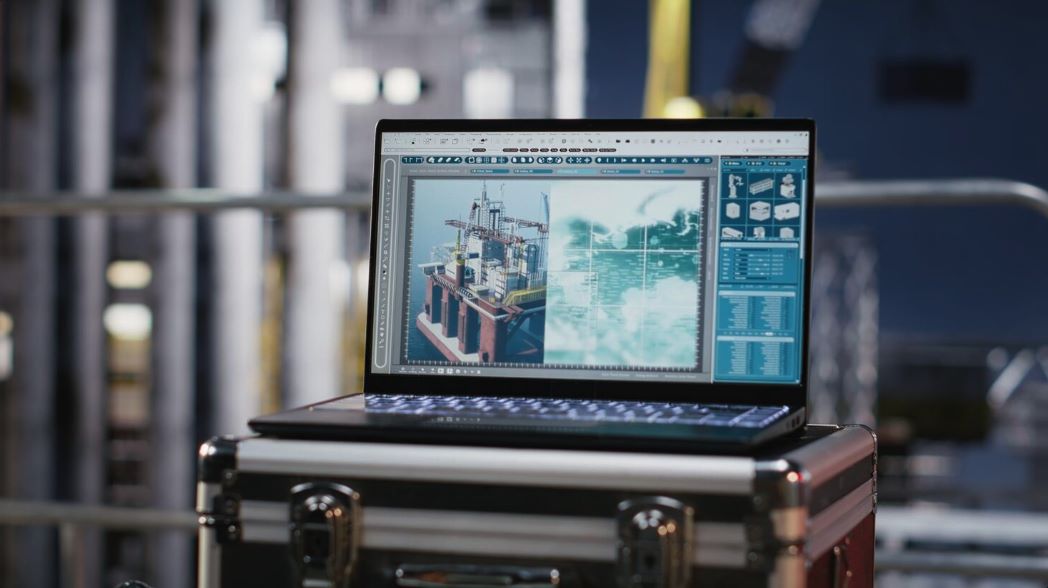
The vessel monitoring functions that carry the most weight, engine anomaly detection, compliance logging, and catch monitoring, all share one requirement: inference that runs when the connection does not. Edge AI delivers that capability, and the hardware it runs on decides whether the capability holds under commercial marine conditions. The discipline behind improving fleet visibility on land is the same discipline that keeps an offshore system trustworthy, and it is built into the board long before the vessel sails.
As your marine telematics hardware partner, PCI brings EMS precision, ruggedisation expertise, and design-for-manufacture capability to take edge-AI vessel-monitoring systems from prototype to global deployment. Contact us today to discuss your programme requirements.
Frequently Asked Questions
What Is Edge AI?
Edge AI is AI inference executed on local hardware at the point where data is generated, rather than on a remote cloud server. The trained model runs on the device itself, which lets the system reach a decision in real time without depending on a network connection. In a marine setting, that means a vessel can analyse and act on its own sensor data even with no cellular or satellite link available.
What Is AI Telematics?
AI telematics is the integration of AI inference into telematics hardware so that vehicle or vessel sensor data is analysed intelligently and in real time. Onboard, it replaces passive data logging with active decision-making, applying inference to engine monitoring, navigation, and compliance functions as the data is produced rather than after the fact.